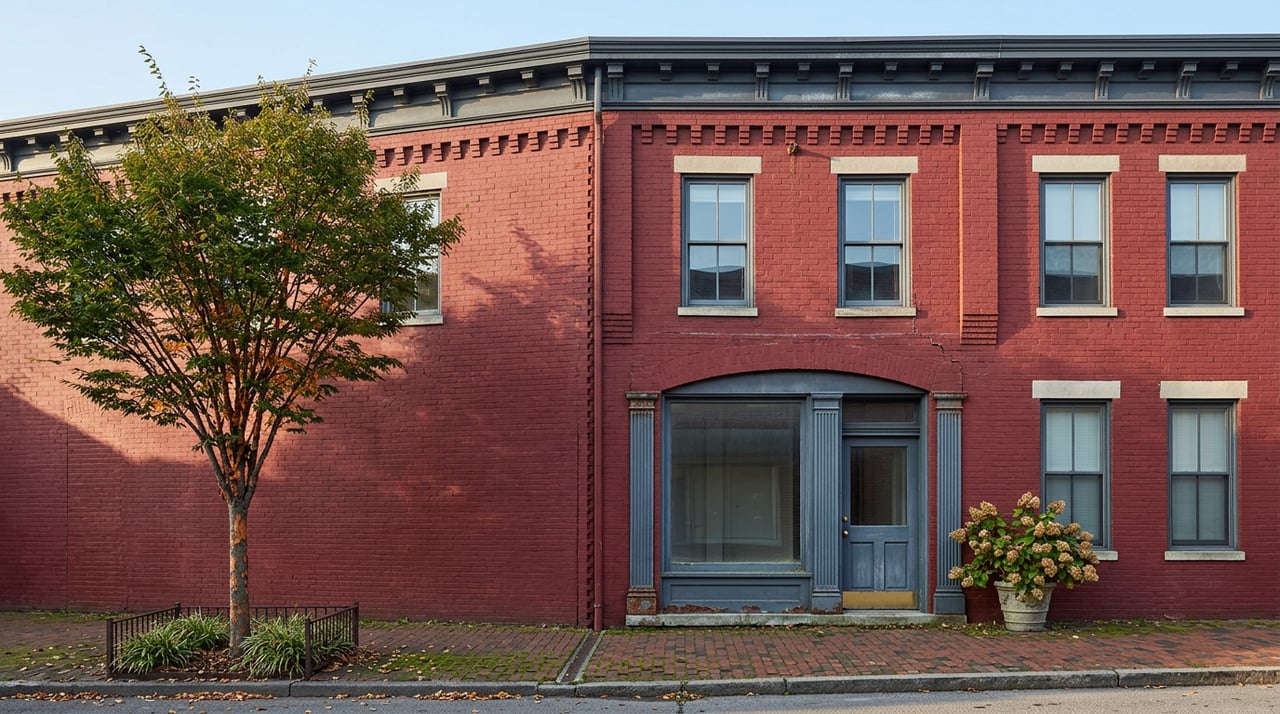
Search "Paducah dollar house" and you'll find a decade of admiring coverage: NPR features, a UNC case study, a Fiscal Times headline about sending in the artists to save a downtown. Every one of those stories describes a program that let qualifying artists buy dilapidated homes in Lower Town for as little as a dollar, with a local bank covering the rest.
What none of those stories tell you is that the giveaway ended years ago. By the time WPSD Local 6 checked in on the program in 2014, only two qualifying houses were left. Americans for the Arts, which still profiles the program on its national projects list, now marks the $1 offer as simply "Currently not available." So the question worth asking isn't whether you can still get a house in Lower Town for a dollar. It's why the most recent published sale figures, covering March 2026, put the district's median at $345,000, a 38 percent jump from the year before. The subsidy is gone. The premium is not. Something else is doing the pricing now, and it isn't nostalgia for a program most current listings never mention.
What the Program Actually Offered
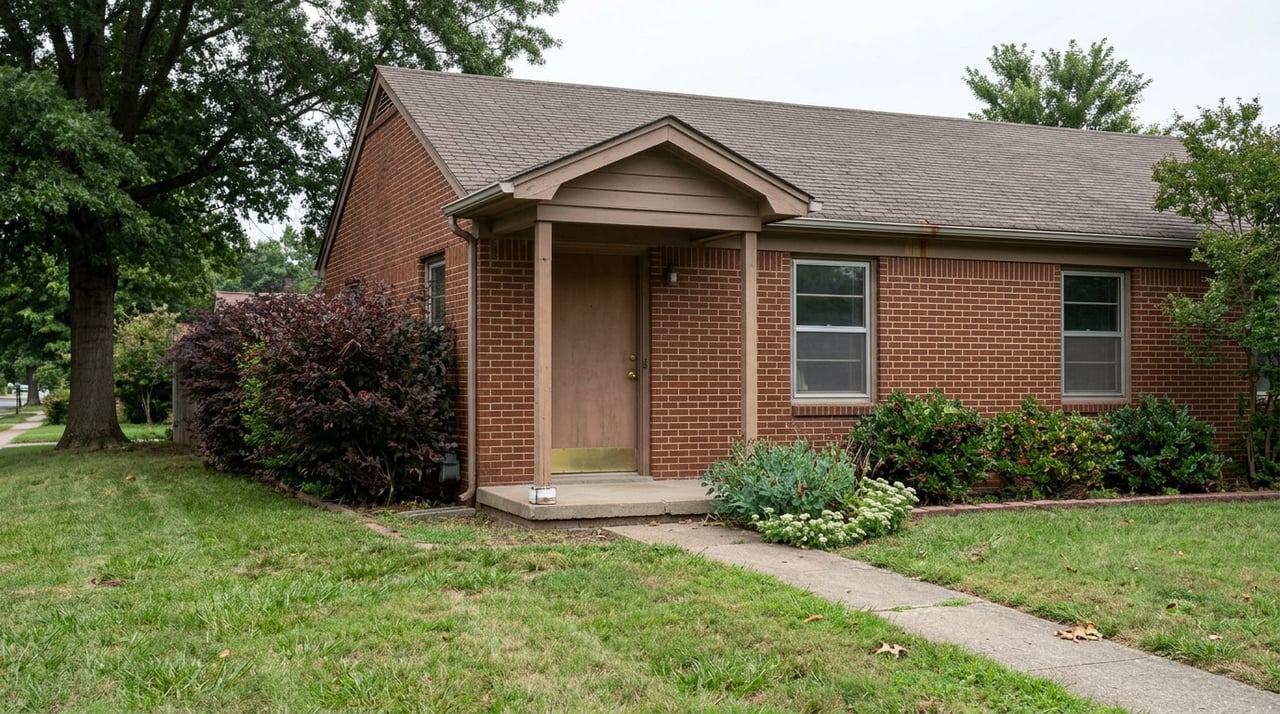
The Artist Relocation Program began in March 2000 after a Lower Town resident named Mark Barone pushed the city's Planning Department to do something about a neighborhood a 1950s survey had already labeled dilapidated. The city commission formally adopted the neighborhood revitalization plan on February 19, 2002, and the mechanics were specific: the city bought abandoned properties and, working with Paducah Bank, offered qualifying artists 100 percent financing at a 30-year fixed rate near 7 percent, covering up to 300 percent of a property's appraised value so a single loan could fund both the purchase and the renovation. The city kicked in up to $2,500 toward architectural or design fees. Vacant lots went to artists for free.
That structure recruited more than 75 artists, residents, and businesses to Lower Town and drove over $30 million in private renovation investment, according to figures cited by the Cape Breton Spectator's reporting on the program and echoed by the Paducah Renaissance Alliance's own program page. It worked exactly as designed. It also had a fixed amount of inventory to work with, and that inventory ran out.
By the time a reporter visited in 2014, the city was down to two remaining eligible properties: the Smedley-Yeiser House, a Greek Revival home built by a ship captain in the late 1800s, and a lot at 421 North Fifth Street. Downtown Development Specialist Melinda Winchester told WPSD the Smedley-Yeiser House was the neighborhood's most significant surviving historic property, pointing to its age, its original construction, and the fact that it remained, in her words, "architecturally intact to that date."
Winchester's comment reads less like a sales pitch and more like an inventory report, and that's the point. Once houses like that one sold, the pipeline of dollar properties had nothing left to give.
Then Versus Now
The clearest way to see what changed is to put the original program's terms next to what a buyer is actually working with in Lower Town today.
| Artist Relocation Program (2000–2014) | Lower Town Market (2026) | |
|---|---|---|
| Entry price | As low as $1 for qualifying, city-owned properties | Median sale price $345,000 (Redfin, March 2026, up 38% year over year) |
| Financing | 100% financing through Paducah Bank, 30-year fixed near 7%, up to 300% of appraised value | Standard market financing, no city or bank subsidy |
| Renovation assistance | Up to $2,500 in city-paid architectural fees | None; renovation cost sits entirely with the buyer |
| Eligibility | Working artists with a demonstrated sales history and business model | Open to any buyer |
| What the price actually secures | A house, plus the city's commitment to rebuild the surrounding block | The legal right to combine residential, retail, and short-term rental use under the district's inherited mixed-use zoning |
That last row is where the real story sits.
The Zoning Outlived the Subsidy
Here's the detail that tends to get lost in the artist-colony retelling: the mixed-use zoning that made the Artist Relocation Program possible wasn't created by the program. It predates it. The city's own planning documentation on the LowerTown Artist Program credits "the existing historical mixed-use zone that was already in place" as one key reason the whole effort worked, explaining that the zone let business and residential uses share the same structure the way they had generations before anyone proposed an artist incentive. The program used a zoning pattern the neighborhood already had. It didn't invent one.
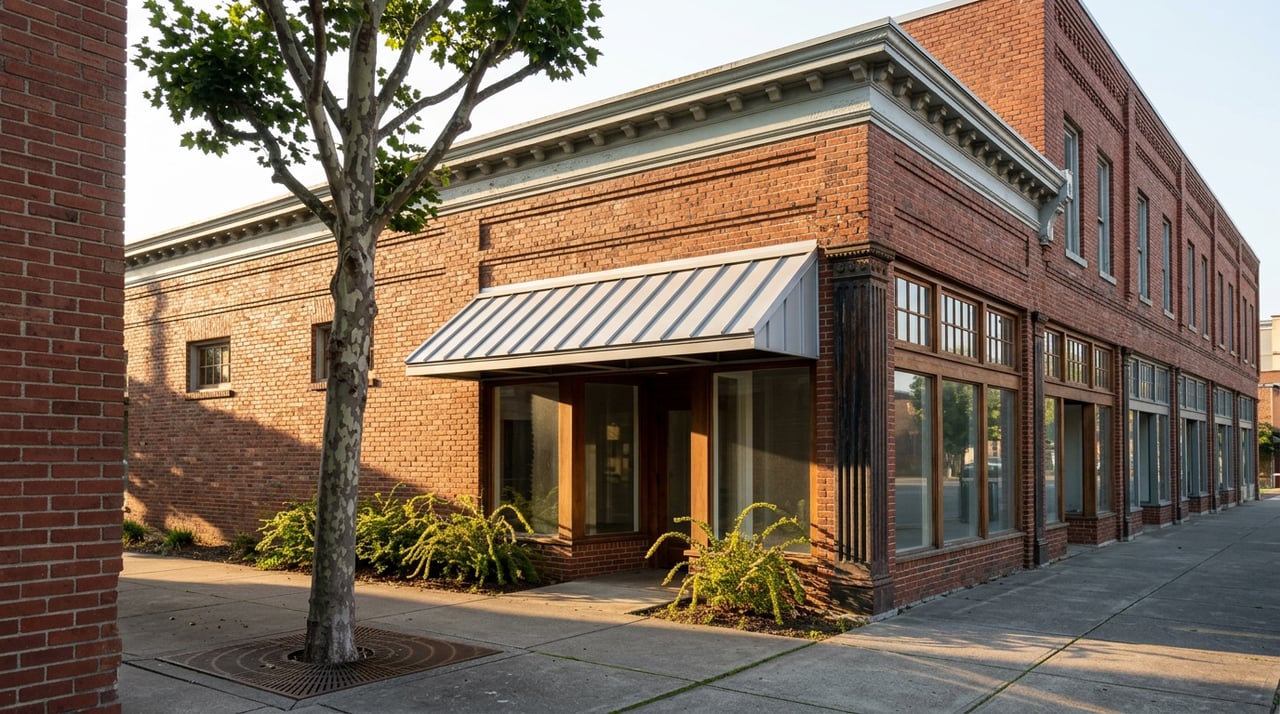
That distinction matters now because the zoning never expired when the artist incentives did. Walk through current Lower Town listings and you can see the zoning working in real time, no city subsidy required. One recently listed property built in 2008 pairs a ground-floor one-bedroom apartment and separate retail or office space with a fully functioning short-term rental unit upstairs, described by its listing as generating consistent Airbnb and Vrbo income. Another, a 4,400-square-foot new-construction home built in a Victorian style, comes with a detached three-bay garage that includes a one-bedroom apartment currently producing rental income. A third is a condo inside the Colonial House, a National Register-listed building restored with its original brick and fireplace intact. None of these properties involve an artist eligibility requirement or a subsidized loan. What they share is a lot that legally permits a residence to also function as a business, which is precisely the arrangement the 2002 plan preserved rather than created.
If you're comparing Lower Town to other Paducah neighborhoods, this is the number that should reset your thinking. You aren't pricing a discount program. You're pricing the ability to legally layer income streams onto a residential purchase in a walkable historic district, something most suburban zoning in the region simply doesn't allow. Our Paducah neighborhood guide covers how that compares to other pockets of the city, and if a live/work purchase is genuinely on the table, it's worth a look at how we think about commercial-residential hybrid properties before you write an offer.
What the Citywide Numbers Hide
Paducah's overall housing market told a very different story over the same stretch. Citywide, the median sale price in January 2026 was $139,000, down 26.8 percent from the year before, with homes taking a median of 77 days to sell compared to 66 days the prior January, and fewer transactions closing overall. Downtown Paducah, a different segment that overlaps but isn't identical to Lower Town, moved the opposite direction: a $300,000 median sale price in January 2026, up 81.8 percent year over year.
Read those three numbers side by side and the citywide median stops looking like useful information for anyone specifically evaluating Lower Town or Downtown. A blended city figure can fall while its most in-demand historic pockets climb sharply, because a handful of expensive, well-documented sales in a small, tightly bounded district can swing a neighborhood median far more than they'd swing a citywide one. If you're using a general Paducah number to budget for a Lower Town purchase, you're using the wrong yardstick.
What's Still Standing From the Original Program
The subsidy ended, but the infrastructure it built didn't disappear with it. A.I.R. Studio Paducah, founded in 2004 by artist Alonzo Davis after he was drawn to the neighborhood by the relocation program, still operates a residency for visiting artists six blocks from the Ohio River. Galleries that trace back to the program's era, including Pinecone Gallery and Stornoway House Gallery, continue to show work in the district, alongside the Yeiser Art Center, the Art Guild of Paducah, Bricolage Art Collective, and Raven & Moth. The Paducah Convention & Visitors Bureau's own 2026 coverage of the Lower Town Arts & Music Festival, an event with roots going back to 1981, points visitors toward Paducah Beer Werks as a neighborhood anchor before the festival's Friday kickoff.
None of that cultural infrastructure requires a buyer to be an artist. It does help explain why demand for live/work inventory in the district hasn't cooled even after the subsidy that built the neighborhood's reputation dried up. A gallery scene and an artist residency program don't pay anyone's mortgage, but they do the same thing any established commercial corridor does for a residential premium: they signal that foot traffic, tourism, and short-term rental demand aren't speculative bets. They're already happening.
Before You Write an Offer
A few things worth confirming before treating Lower Town like the discount program you may have read about:
The dollar-house program is not active. Confirm current status and any remaining city-owned inventory directly with Paducah's Planning Department at 270-444-8690 rather than relying on older press coverage.
Historic district status can mean design review. Lower Town sits within a National Historic District, and properties conveyed through the Paducah Renaissance Alliance were explicitly required to follow Historic Design Guidelines for exterior work. If you're planning a facade change, confirm review requirements before you budget the renovation.
Mixed-use zoning is the asset, not the artist requirement. The occupational eligibility that governed the original program never applied to the underlying zoning. Any buyer today can use that same live/work flexibility, provided the specific parcel's zoning and any short-term rental licensing requirements are verified with the city first.
Zoning-driven value like this is exactly where an appraisal-trained read on a property pays for itself. A comparable sale two blocks away with a legal STR unit isn't really comparable to one without it, and that's the kind of distinction a certified valuation catches and a portal estimate doesn't. If you're weighing a Lower Town purchase, or trying to figure out what a specific parcel's zoning actually permits before you make an offer, Ben Sirk and the team at Sirk & Company have been reading Western Kentucky property records, zoning maps, and appraisal data since 1979. Contact us before you assume a listing's price reflects a program that stopped taking applications years ago.