"Paducah has a unique opportunity, unlike probably most any, nearly any other community in the country," Bruce Wilcox, president and CEO of Greater Paducah Economic Development, said earlier this year while describing the AI data center project headed for McCracken County. He wasn't talking about a spec building when he said it. But the sentence explains one anyway.
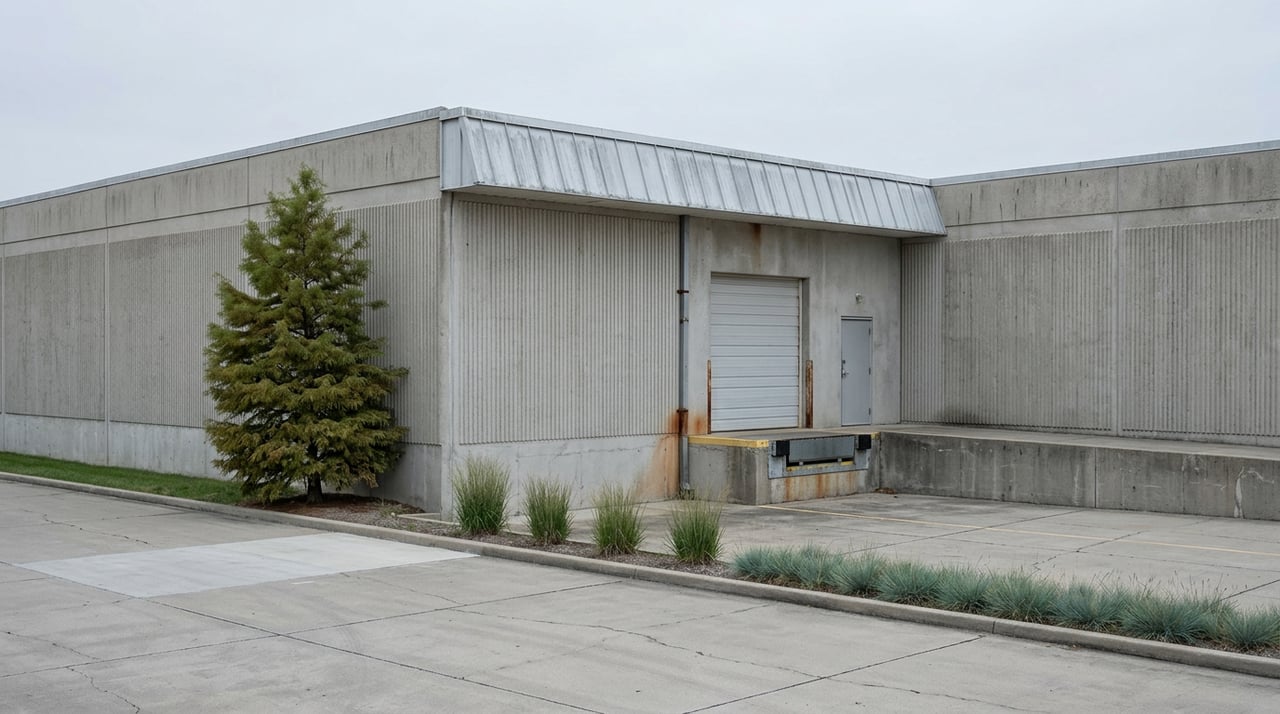
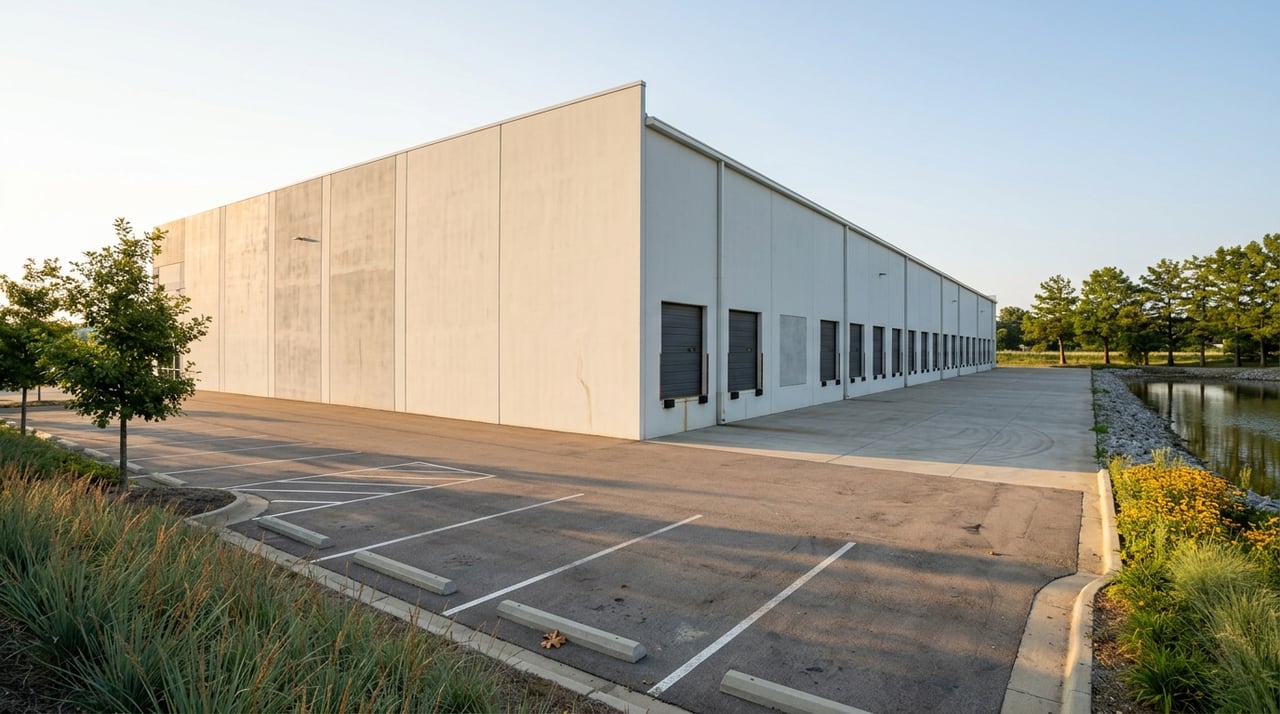
On August 11, 2026, the Paducah Board of Commissioners approved two ordinances authorizing construction of a 100,000-square-foot industrial building at 5700 Commerce Drive in Industrial Park West. No tenant has signed a lease. No company has committed to buy it. The building simply gets built, and then someone is expected to want it.
That is, by definition, a bet. And it's a bet that most of the private industrial development world has stopped making in 2026.
The Vote Almost Nobody Outside City Hall Noticed
The two ordinances passed 4 to 1, with Commissioner Buz Smith casting the dissenting vote on both. The first authorizes an interlocal agreement between the City of Paducah and the Paducah-McCracken County Industrial Development Authority, under which the IDA will act as project manager, developer, and owner of the finished building. The second authorizes the city to issue general obligation notes of up to $6 million to cover construction costs.
The city isn't building this alone. Paducah is the recipient of a $2 million grant through the Kentucky Product Development Initiative, described by GPED as the maximum eligible award under that program. The grant was secured back in June 2025, after the city sent a letter of support with the McCracken County Fiscal Court in March of that year. The commission then committed to the $6 million match in July 2025.
In other words, it took about fourteen months to move from "we have the grant" to "we have the ordinances." That gap is worth sitting with if you're a business owner evaluating how fast public-private industrial deals actually move in this market. Even a project with grant money already secured and broad political support still spent over a year in the approval pipeline before a single beam goes up. If your own timeline depends on this building, or one like it, plan around that pace, not the headline.
Why Private Developers Have Mostly Stopped Doing This
Here's what makes the timing notable. CBRE's 2026 industrial outlook says speculative development nationally will be minimal this year, citing an oversupply of vacant first-generation space and difficulty obtaining construction financing. Vacancy is expected to stabilize in the mid-6 percent range, not because demand collapsed, but because building without a signed tenant has become too risky for most private capital to underwrite right now.
Paducah's public development authority is doing the opposite of what the national market is doing. That's not an accident, and it's not civic boosterism. It's a structural difference in who's holding the risk.
A private developer building on spec has to carry construction debt against uncertain lease-up timing, with no guaranteed exit. The IDA's version of that risk looks different: a $2 million grant that doesn't have to be repaid, and a $6 million note structure where the city expects to be reimbursed once the building sells. The upside if it leases quickly still belongs to the local economy. The downside if it sits empty for a while is absorbed by a public balance sheet built for exactly that kind of patience, not by a developer's quarterly return targets.
What the Subsidy Actually Buys
A grant-and-note structure like this doesn't just cover construction costs. It buys something a signed lease can't: existing square footage that a company can walk into on day one, instead of a shovel-ready site that still requires eighteen to twenty-four months of design and permitting before occupancy.
The deal terms, laid out plainly:
- $2 million Kentucky Product Development Initiative grant to the City of Paducah, the maximum eligible award under the program
- Up to $6 million in city general obligation notes to fund remaining construction costs
- The Paducah-McCracken County Industrial Development Authority as project manager, developer, and titled owner of the finished building
- Anticipated reimbursement to the city once the building is sold to an end user
For a company doing site selection, a finished building removes the biggest variable in a relocation or expansion decision: how long until we can actually operate here. That's the product being sold, not just industrial square footage.
The Real Reason This Building Exists
A spec building only makes sense if someone with real capacity needs is coming, and coming soon. Paducah has three of those someones lined up, at a scale most micropolitan markets never see at once.
General Matter is leasing 100 acres at the Department of Energy's Paducah Site to build a uranium enrichment facility, with tree clearing already underway as of early 2026 and operations targeted by the end of the decade, pending a Nuclear Regulatory Commission license. Global Laser Enrichment has a separate $1.8 billion Paducah Laser Enrichment Facility in the licensing pipeline, with the NRC having completed an acceptance review of its application and GLE targeting deployment by 2030. And on July 29, 2026, a coalition of energy and utility companies announced the Paducah American Energy Hub, a $100 billion AI data center and energy campus on federal land in Western Kentucky, described as one of the largest private investments in state history. An earlier version of the same DOE-site AI data center project, before it carried that name, had McCracken County's judge executive projecting roughly 5,000 construction workers on site during the build.
None of those three projects need office space. They need contractors, subcontractors, equipment suppliers, and support businesses that need a building right now, not in two years once their own construction is finished. A 100,000-square-foot spec building in Industrial Park West, less than a mile from Interstate 24, is sized and positioned for exactly that kind of tenant. It's not a bet on generic industrial demand. It's a bet on a specific, already-announced wave of it.
The Other Half of the Playbook: Making Land Instantly Usable
The spec building isn't GPED's only move to compress the time between "interested" and "operating." At the Ohio River Triple Rail Site, a 417-acre tract expandable past 1,000 acres with partner land, the agency completed a $4.1 to $4.2 million grading and excavation project that moved 540,000 cubic yards of dirt and raised the entire property above the 500-year floodplain.
"It's essentially build-ready, other than where someone might need deep foundations," Wilcox said of the site.
A new access road off KY-358 is under construction, funded by a $16 million appropriation from the Kentucky legislature, and requires a new bridge over the Paducah and Illinois rail line along with easement signatures from all three companies that jointly own that line: Canadian National, BNSF, and Paducah and Louisville Railway. A separate KPDI grant funded a sewer extension across the site in partnership with the Paducah and McCracken County Joint Sewer Agency. The state has also appropriated $3.5 million toward design, environmental review, and permitting for a proposed Paducah McCracken County Riverport West.
Grading, floodplain clearance, sewer, and rail access all done before a buyer shows up. It's the land version of the same logic behind the spec building: remove the multi-year infrastructure lead time from the equation entirely, so the only clock left running is the one a company controls.
What This Means Depending on Which Side of the Table You're On
If you're a business owner sizing up warehouse, distribution, or light industrial space in Western Kentucky, the practical question isn't whether Paducah has land. GPED controls more than 1,000 acres across three parks: Commerce Park for office use, Industrial Park West for distribution, and the Ohio River Triple Rail Site for heavy industrial and rail-served operations. The question is which of those acres are actually ready today versus which still require a permitting cycle before you can break ground.
| Park | Primary use | Access | Readiness as of mid-2026 |
|---|---|---|---|
| Commerce Park | Office | McCracken Blvd corridor | Built out; recent tenants include federal law enforcement offices |
| Industrial Park West | Distribution | Under a mile from I-24 | New 100,000 sq ft spec building approved Aug 2026 |
| Ohio River Triple Rail Site | Heavy industrial, rail-served | KY-358, triple rail access | Graded, above floodplain, sewer extended, access road under construction |
If you're an investor or developer weighing land near these parks, the presence of a subsidized spec building changes how you should think about comparable value. A privately built spec project in this market would have to price in the same financing friction CBRE describes nationally. This one didn't, because a public authority absorbed that friction on behalf of the region. That's not a distortion you can ignore when comparing asking prices or timelines against it. It's a competitive fact.
Frequently Asked Questions
What exactly is a speculative building? A speculative, or spec, building is constructed before any tenant or buyer has signed on. The developer takes on the risk that a user will emerge during or shortly after construction, in exchange for being able to offer immediate occupancy once one does.
Who owns the building at 5700 Commerce Drive once it's finished? The Paducah-McCracken County Industrial Development Authority will serve as project manager, developer, and owner of the facility under the interlocal agreement approved August 11, 2026. The city expects to be reimbursed for its investment once the building sells to an end user.
How is the Ohio River Triple Rail Site different from Industrial Park West? Industrial Park West is positioned for distribution and logistics users close to Interstate 24. The Triple Rail Site, at 417 acres and expandable further, is being prepared for heavier industrial operations that need direct rail access, with recent grading, floodplain clearance, and sewer work aimed at reducing the lead time for a large user to locate there.
Reading a market like this takes more than a vacancy rate. It takes knowing which parcels are actually ready and which grant, note, or ordinance is doing the work behind the scenes. Sirk & Company Real Estate has followed Western Kentucky's commercial and industrial market since 1979, with appraisal-grade analysis behind every site selection, lease, or acquisition conversation. If you're evaluating space in Paducah's industrial corridor, Contact Us.