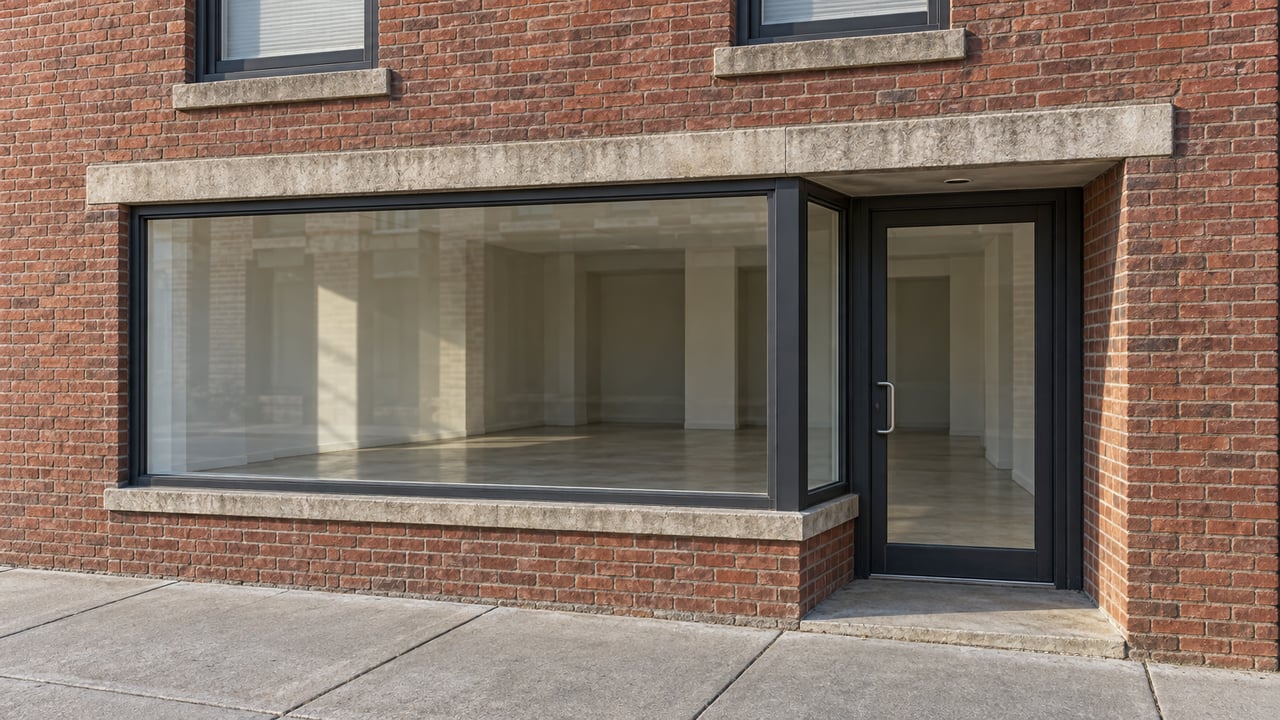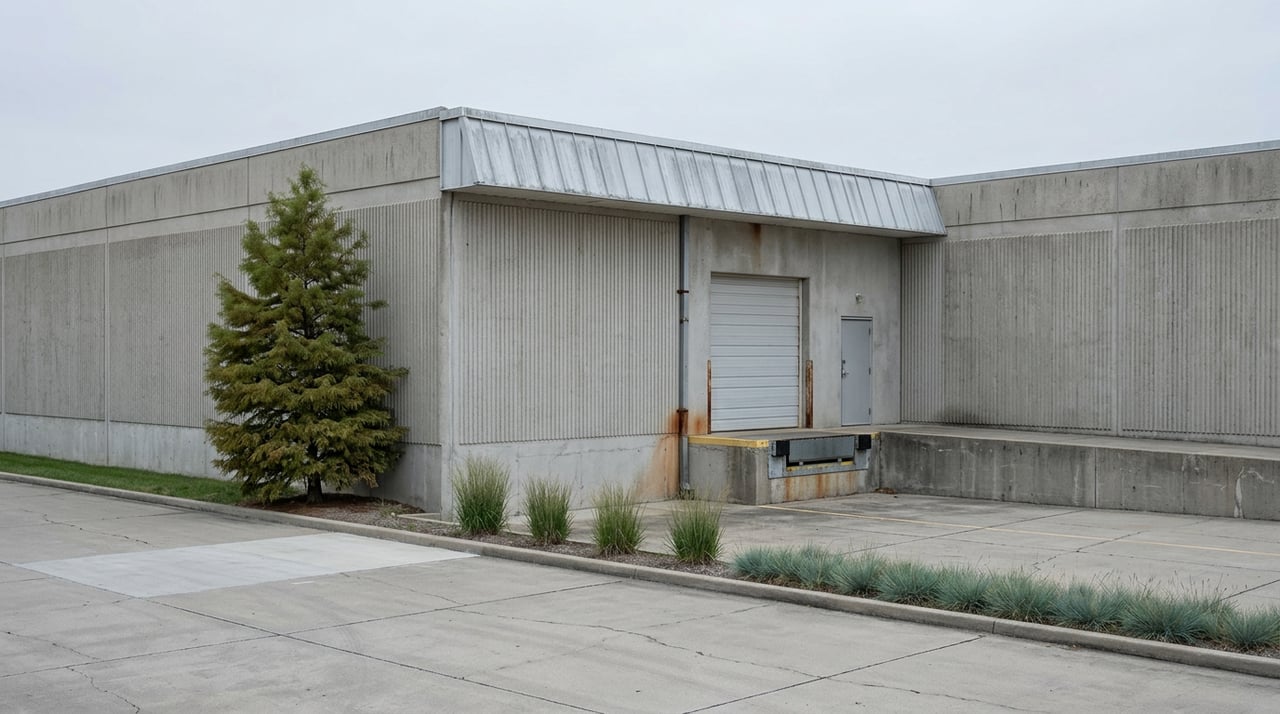
MegaFit Meals announced on August 27 that it is spending $9.25 million to build a new 40,000-square-foot food manufacturing facility in Calvert City. The company already has a plant there. The new one is going up down the street from it, close enough that the state's own announcement described the location that way rather than giving a separate address. Forty new jobs, a ten-year state incentive agreement, and a company that could employ more than 140 people in Kentucky once the positions are filled.
MegaFit's expansion is one example of how existing site circumstances can shape a project.
Look at Calvert City's other two major 2026 investments and the same shape shows up twice more.
The Pattern Repeats Twice
In February, Gov. Andy Beshear announced that James Composites, a fiberglass barge cover manufacturer and part of the James Marine Inc. family of companies, would spend $5.8 million establishing its first Kentucky operation at 390 Riverside Lane in Calvert City. The site gives the company direct access to the Tennessee River through an existing marine ways system, the kind of infrastructure that cannot be built on demand and does not show up on a generic land listing. As of that February announcement, construction on the new building was expected to be complete by November 2026, with operations targeted for early 2027. James Composites itself had only been organized as a company in April 2025, less than a year before the Calvert City site was announced.
Then there is Marshall Yards. Churchill Downs Incorporated picked a roughly 4.5-acre parcel at the intersection of I-69 and I-24, the site of the former Willow Pond Restaurant, to build its eighth historical horse racing venue in Kentucky. The $40 to $50 million project is planned for a specific, already-positioned parcel that the city's own planning board had already zoned for that intersection, and Calvert City Mayor Gene Colburn described the surrounding stretch of I-24 as land the project had turned from "a dark and underutilized area" into a gateway.
Three unrelated companies. Three different industries: food manufacturing, marine fabrication, gaming. Three separate project announcements in the same twelve months. And in every case, the site had something that already existed on or near it, whether that was an operating plant, a river access system, or a zoned interchange parcel with a prior use.
| Project | 2026 Investment | Jobs | What made the site work |
|---|---|---|---|
| MegaFit Meals | $9.25 million | 40 | Adjacent to its existing Calvert City plant |
| James Composites | $5.8 million | 25 | Existing marine ways system on the Tennessee River |
| Marshall Yards | $40 to $50 million | 90 | Zoned interchange parcel with a prior commercial use |
How Site-Specific Advantages Shaped These Projects
Commercial land listed for sale in and around Calvert City currently averages roughly $50,800 per acre, which sounds like a market with plenty of room to build. But raw acreage at that price is not the same asset as a site with river frontage, interstate visibility, or an existing operating tenant already on it. The projects announced in 2026 illustrate how those site-specific features can distinguish one parcel from another.
That gap between generic acreage and site-specific infrastructure is the whole story. A buyer comparing sites in Calvert City can consider both listings and site-specific features. The three project announcements this year involved different site circumstances. MegaFit's project is next to its existing plant. The James Composites site has direct access to a marine ways system on the Tennessee River. Marshall Yards is planned for a zoned interchange parcel with a prior commercial use.
As we noted when we broke down how Calvert City's commercial land is priced by access, not acreage, the blended average price per acre in this corridor hides three distinct markets. What 2026 has added to that picture is a second layer. The projects show that access, infrastructure, and continuity of ownership can also shape site selection.
Colburn made the point himself when he talked about why the James Composites project mattered to the city: he said an expansion signals the strength of the community and the importance of retaining companies committed to the region.
That is Colburn's view of what an expansion can signal about the community.
What This Means If You're Looking at Calvert City
For a business owner or investor evaluating this corridor, these projects highlight the importance of looking at site-specific features alongside marketed listings. The three projects announced in 2026 each involved either an existing relationship to the site or a specific infrastructure feature.
That changes the due diligence a buyer needs before writing an offer or a letter of intent. A parcel's price per acre tells you very little if you do not also know whether it carries utility capacity, river or rail access, or a zoning history that would let you move faster than a competing buyer starting from raw land. That is the kind of question an appraisal-grade site analysis is built to answer before you are committed to a deal, not after.
If you are weighing a Calvert City site, whether it is an assemblage next to an existing operation, a parcel with water access, or a corner at an interchange with a prior commercial use, that is exactly the kind of feasibility and valuation work Sirk & Company Real Estate does before a client negotiates, not as an afterthought once terms are already on the table. You can see the firm's approach to commercial brokerage and property valuation, or look at the broader Calvert City market for context on what else is moving in the corridor.
Frequently Asked Questions
Does this pattern apply to retail or office space in Calvert City, or just industrial and gaming? The three 2026 project announcements covered here involve industrial and entertainment uses, each with a site-specific advantage. Retail and office space in the corridor still largely trade on visibility and traffic counts, which is a different calculation covered in our earlier look at how access shapes Calvert City land pricing.
How can a buyer compare sites with different features? Start by identifying the features the project needs, whether that is river access, rail proximity, utility capacity, or interstate frontage, and then compare how those features fit the requirements of each parcel under consideration.
Do the 2026 project announcements mean commercial land prices are rising fast in Calvert City? Average per-acre pricing for listed commercial land has not moved dramatically this year. The projects announced in 2026 highlight how site-specific features can shape a project alongside the price of raw acreage.