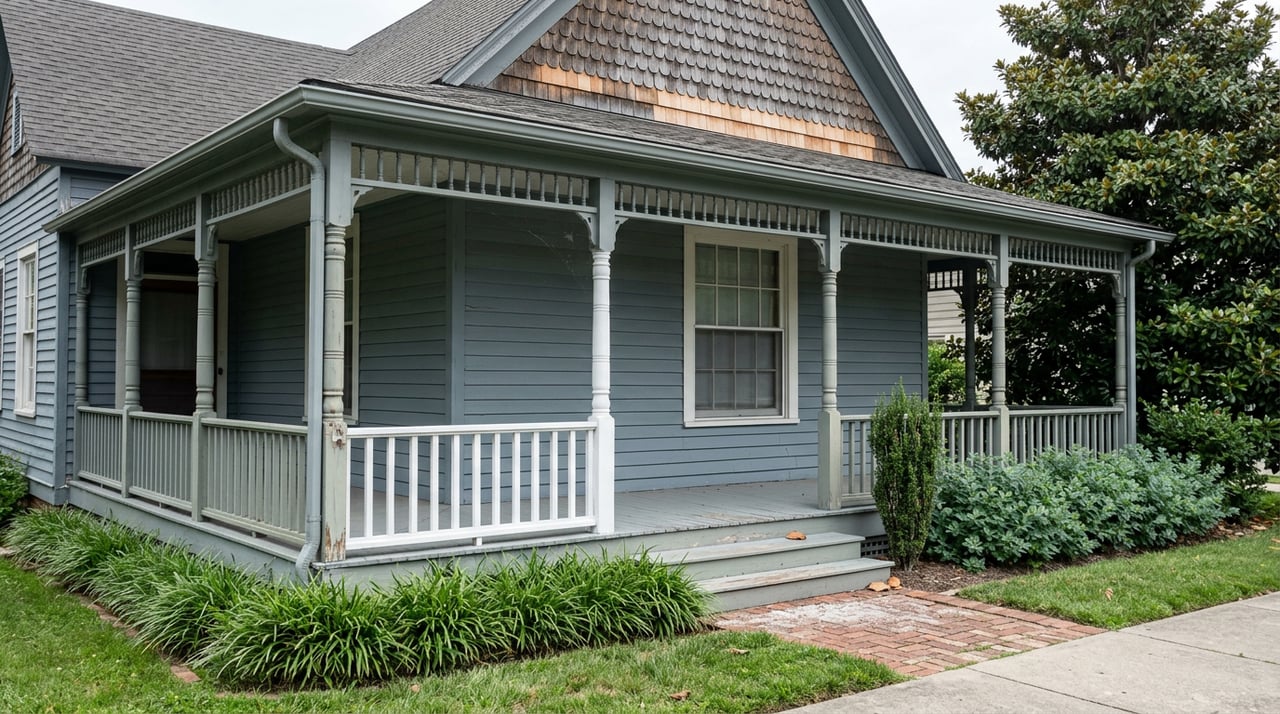
In August 2023, a Paducah city commissioner received permission to install nine mini-split condenser units on a house at 302 North 7th Street, inside the Lower Town Historic Neighborhood Zone. The permission came with a condition attached: get a formal Certificate of Appropriateness from the city's Historic and Architectural Review Commission before the work started. That step didn't happen first. Neighbors complained that the white units were visible from both 7th Street and Monroe. A neighbor told a HARC meeting, "they do stand out." The commission agreed and ordered the visible units removed or relocated.
That case is the clearest illustration of what actually governs a Lower Town renovation, and it isn't your contractor's schedule or your loan closing date. It's a five-member city board that meets once a month, and whose calendar you have to plan around before you plan anything else.
The Approval Comes Before the Work, Not After
Lower Town sits inside what the city calls the H-2 Historic Neighborhood Zone. Under Paducah's own guidance, before any exterior work visible from the roadway is done on any structure in the H-2 zone, a Certificate of Appropriateness is required, full stop. That covers more than facade repainting. Windows, siding, roofing material, porch rebuilds, fences, and yes, where you mount a condenser unit, all fall under exterior appearance if they're visible from the street.
HARC doesn't review these requests against generic taste. Board decisions are measured against the Secretary of the Interior's Standards for Rehabilitation, layered with Lower Town's own design guidelines, last revised in 2022. The commission itself is a specialized body: five members appointed by the mayor and confirmed by the city commission, with a preference for at least two members who have a background in architecture, history, or preservation. This is a body built to slow work down in the name of getting it right, not to rubber-stamp a homeowner's Pinterest board.
The consequence for a buyer is straightforward. If your offer assumes you'll close, then start ripping out old windows the following week, that assumption is wrong for anything on the exterior. The certificate has to exist first.
Why the Timeline Catches Buyers Off Guard
Here's the part that surprises even prepared buyers: HARC doesn't meet whenever you're ready. It meets on the second Monday of each month at 5:30 p.m., and applications are due the Friday that falls 21 days before that meeting. Miss the window and you're not waiting a few days. You're waiting a full cycle, sometimes longer if a meeting is canceled, which happened three months in a row earlier this year.
| Step | What It Requires |
|---|---|
| Application deadline | Friday, 21 days before the HARC meeting |
| HARC meeting | Second Monday of the month, 5:30 p.m. |
| Approval | Certificate of Appropriateness issued if approved |
| If work starts first | Risk of a stop-work order and possible removal, as at 302 North 7th Street |
| If denied or appealed | 30 to 60 days to appeal, depending on notice date |
Stack a few of these cycles against a real closing date and the math gets uncomfortable fast. A buyer who closes in early August and wants new windows before winter has already missed one meeting's application deadline by the time the ink dries on the deed. That's not a hypothetical. It's the ordinary rhythm of owning property in this zone, and it should shape how a buyer schedules contractor bids, weatherization, and even move-in dates before the offer is signed, not after.
The Grants You Assume Exist and Don't
Buyers researching Lower Town often find Paducah's downtown rehabilitation incentives and assume they apply here too. Mostly, they don't.
The city's Facade Grant sounds like exactly what a Lower Town owner would want: matching funds toward exterior improvements on a historic structure. But only commercial properties are eligible, and the grant tops out at $2,000 per project against a total pool of $8,000 a year citywide. A residential owner in Lower Town gets none of it.
The Roof Stabilization Assistance Program works on a similar cycle, matching up to half the cost of roof repairs, but it opens for applications only at specified points in the fiscal year. The most recent confirmed application window closed August 18, 2025, and reopens only when the city allocates new funds for the next cycle. It isn't a standing fund a homeowner can tap on demand.
Then there's the Paul Bruhn Historic Revitalization Grant, the largest of the three by a wide margin. The city secured $750,000 from the National Park Service in 2024, and in January 2026 the city commission approved roughly $500,000 of it across five projects: $100,000 to the Johnston-Backus Building for electrical, plumbing, and HVAC work, $100,000 to Market House Theatre's education building for structural repairs, $88,996 to the Guthrie Building for boiler and HVAC upgrades, $100,000 to the Vanguard Building for plumbing, and $100,000 to the Columbia Theater for vestibule and ticket booth work. Assistant City Manager Michelle Smolen said the city understands that historic buildings are important and that there's real complexity in renovating them. That's a genuine commitment of public money to historic preservation in Paducah. It's also money that, by the program's own criteria, only reaches buildings in the Downtown Historical District or the Southside neighborhoods.
Lower Town is on the National Register of Historic Places in its own right, alongside the Downtown Commercial District and the Jefferson Street-Fountain Avenue District. That listing matters for things like state and federal tax credit eligibility on a rehabilitation. It does not put Lower Town on the Paul Bruhn subgrant list. A buyer who assumes national historic status automatically opens the door to city grant money is working from the wrong premise.
| Program | Eligible Property | Cap |
|---|---|---|
| Facade Grant | Commercial only | $2,000 per project, $8,000/year citywide |
| Roof Stabilization Assistance | Historic Downtown area, seasonal application windows | Up to 50% of cost |
| Paul Bruhn Historic Revitalization | Downtown Historical District and Southside only | Up to $100,000 per project |
The practical read: a Lower Town homeowner renovating a residential property should plan to fund exterior work without city matching dollars, not because Paducah lacks preservation programs, but because the ones that exist are aimed at commercial and downtown-adjacent buildings.
What This Means Before You Write the Offer
None of this is a reason to avoid Lower Town. Its housing stock, much of it Victorian and Queen Anne construction from the 1880s and 1890s, is part of what makes the neighborhood valuable, and its listings routinely turn over as renovation projects rather than move-in-ready homes. Recent listings in the neighborhood have averaged roughly 70 days on the market, longer than a turnkey suburban sale, which tracks with a buyer pool that expects to do work rather than simply move in.
The number that should change your budget isn't a renovation estimate from a contractor walkthrough. It's the number of HARC cycles between your closing date and your planned completion date. A single missed application deadline can add a month to a project before a single board makes a swing. Two or three exterior items staged sequentially, say a roof this cycle and windows the next, can turn a one-season renovation into a two-year one.
If you're evaluating a Lower Town property with exterior work in mind, that timeline belongs in your offer strategy and your financing plan just as much as the contractor's quote does. This is the kind of feasibility question that benefits from someone who reads both the market and the property, which is the overlap Ben Sirk works in daily between brokerage and certified appraisal.
Frequently Asked Questions
Does interior renovation work need HARC approval? No. The Certificate of Appropriateness requirement applies specifically to exterior appearance changes visible from the roadway. Interior work, kitchens, bathrooms, structural changes not visible from the street, generally doesn't trigger HARC review.
What if the previous owner already made unauthorized changes? The obligation to correct unpermitted exterior work can pass with the property. Buyers should ask directly whether any exterior modifications, including additions, siding, or mechanical equipment placement, received a Certificate of Appropriateness before purchase.
Is all of Lower Town inside the H-2 zone? Lower Town is the primary residential area covered by the H-2 Historic Neighborhood Zone designation, distinct from the H-1 Historic Commercial Zone that covers the Market House and Second Street area downtown.
What happens if you skip the certificate and do the work anyway? The 302 North 7th Street case is instructive. HARC can require visible unauthorized installations to be removed or relocated, and property owners have a limited window, 30 to 60 days depending on notice, to appeal that decision.
Buying in Lower Town rewards patience and planning as much as it rewards good taste in old houses. If you're weighing a fixer-upper here, or trying to figure out what a property's renovation timeline actually looks like before you write an offer, Contact Us and we'll walk through it with you, house by house, board meeting by board meeting.