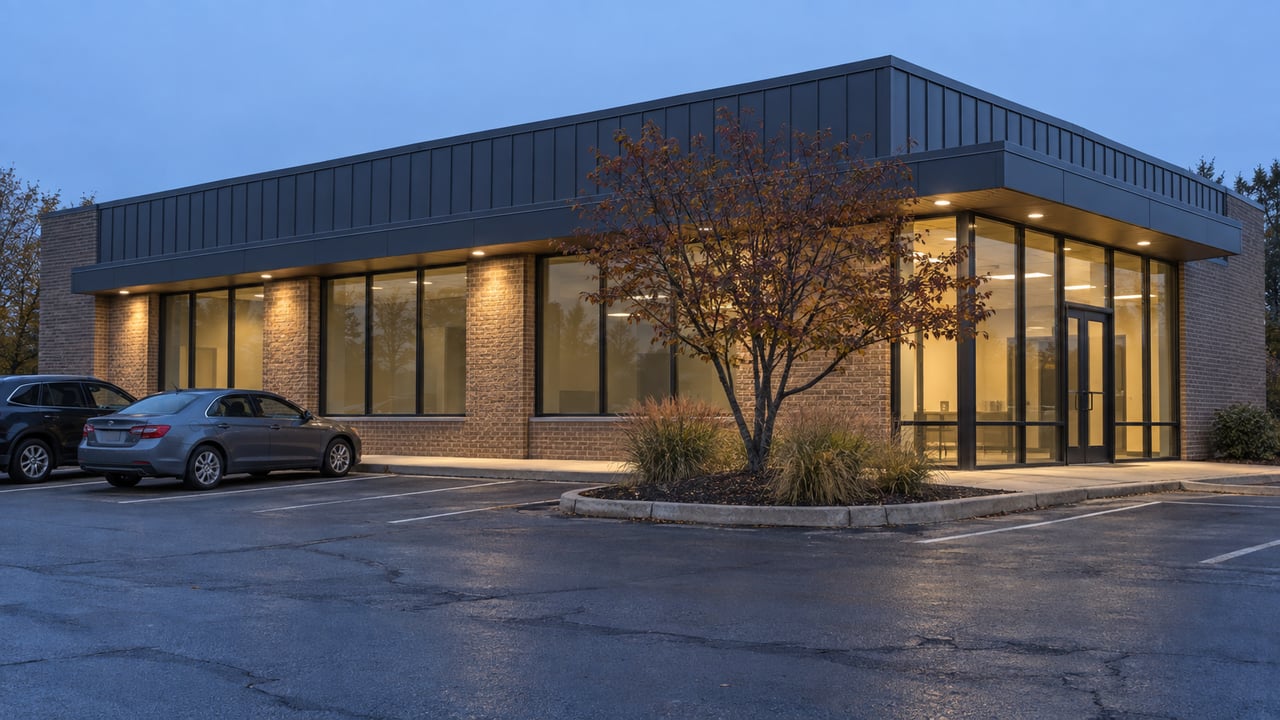
On the Monday before the ribbon cutting, a small crowd gathered inside a brand new building at the intersection of I-24 and US 62 to place the first bets anyone had ever made there. Assistant General Manager Dave McDade got the honor of the first wager on the gaming floor. Marshall County Judge Executive Kevin Spraggs got the first simulcast bet on an actual horse race, and he put his money on the number three horse, a nod to his own history with stock car racing. Mayor Gene Colburn stood up afterward and told the room that visitors to the lakes could no longer say they had nothing to do while they were there.
Marshall Yards opened to the public on February 25, 2026. Seven months later, the building is still running, and the thing that changed for Calvert City isn't really the betting machines. It's the hours.
What used to sit on this lot
Before Marshall Yards, the four and a half acre parcel at that interchange held the Willow Pond Restaurant. Churchill Downs Incorporated bought the property, tore down the old building, and spent between $40 and $45 million putting up a 23,000 square foot facility in its place. It's the company's eighth historical horse racing venue in Kentucky, and it runs as an annex of Oak Grove Racing, Gaming & Hotel, with a share of its revenue going toward purses for the racing meet there.
The location was picked for a reason beyond visibility. It sits less than five minutes from Kentucky Lake, at one of the two interstates that cross through Calvert City. Anyone driving in off I-24 from Paducah or up from the lake resorts on US 62 passes directly by it.
What's actually running now
The gaming floor holds more than 225 historical racing machines, a retail sportsbook, and simulcast wagering on horse races from other tracks. That part of the building looks and reads like what most people picture when they hear the word casino, even though the games are structured around past race outcomes rather than pure chance.
The part that changes a Tuesday night in Calvert City is what sits next to it. The Sports Bar books live bands and DJs on a regular rotation, and the Wet Your Whistle restaurant handles food service for anyone who wants a meal without leaving the building. None of it closes early. The posted hours run 9 a.m. to 3 a.m. Sunday through Thursday and 9 a.m. to 5 a.m. Friday and Saturday, which puts it among the latest-running rooms anywhere in Marshall County on a weekend night.
That schedule matters for a town this size. A live band playing past 2 a.m. on a Wednesday, or a sports bar still serving food and drinks into the early morning on a Saturday, is a different kind of fixture than most small towns along this stretch of the lake have had before.
The jobs, and who the venue is actually banking on
Churchill Downs built the project to run about 100 permanent jobs once it was fully staffed, on top of the roughly 250 construction jobs it took to build it. Anyone who already had a FastTrack players card from Oak Grove Racing, Gaming & Hotel could walk in and use it here without signing up again, since Marshall Yards was built to work as an extension of that same rewards system rather than a standalone operation.
Elizabeth Griffith Mudd, president of Kentucky Lake Economic Development, described the bet behind the project in blunt terms after it broke ground. She said the hope was for the facility to draw people in, and then for those same visitors to spend money at the restaurants around town, or book rooms at Kentucky Dam Village's hotels and resorts. In her framing, the value of the building wasn't only what happens inside it. It was whether a Friday night at Marshall Yards turns into a Saturday breakfast at a diner in town or a weekend booked at the lake.
As the Marshall County Daily reported when the venue opened, Churchill Downs CEO Bill Carstanjen put the company's own logic on record:
"Marshall Yards reflects our vision to build destination experiences that generate local economic opportunities, inspire regional tourism, and secure our place at the forefront of racing and entertainment."
Seven months in, the parts of that statement that are easiest to check are the ones that show up in the operating hours and the staffing numbers. The regional tourism part depends on whether the ripple effect Mudd described actually reaches the diners and hotels down the road, which is the kind of thing that takes longer than a season to measure.
For now, what's confirmed is simpler. A lot that used to hold a single restaurant now holds a building that runs later than almost anything else in Calvert City, with a live band some nights and a kitchen open long after most places in town have locked up.
Sirk & Company keeps an eye on how corners like this one change along Calvert City's interstate frontage, because interchange sites tend to set the pace for everything built around them afterward. If you're trying to make sense of what's happening along this corridor or anywhere else in Calvert City, contact us and we'll walk you through what we're seeing.